
Most climbers think of the Karakoram as a summer destination: K2, the Baltoro, big expeditions in July. But in winter the side valleys of Baltistan freeze, and long ribbons of ice appear between granite walls. This is a complete guide toice climbing in Pakistan: where to climb, the first routes, the season, the grades, how to get there and what to bring, written by the team that organised the first ice climbing expedition in the Pakistani Karakoram.
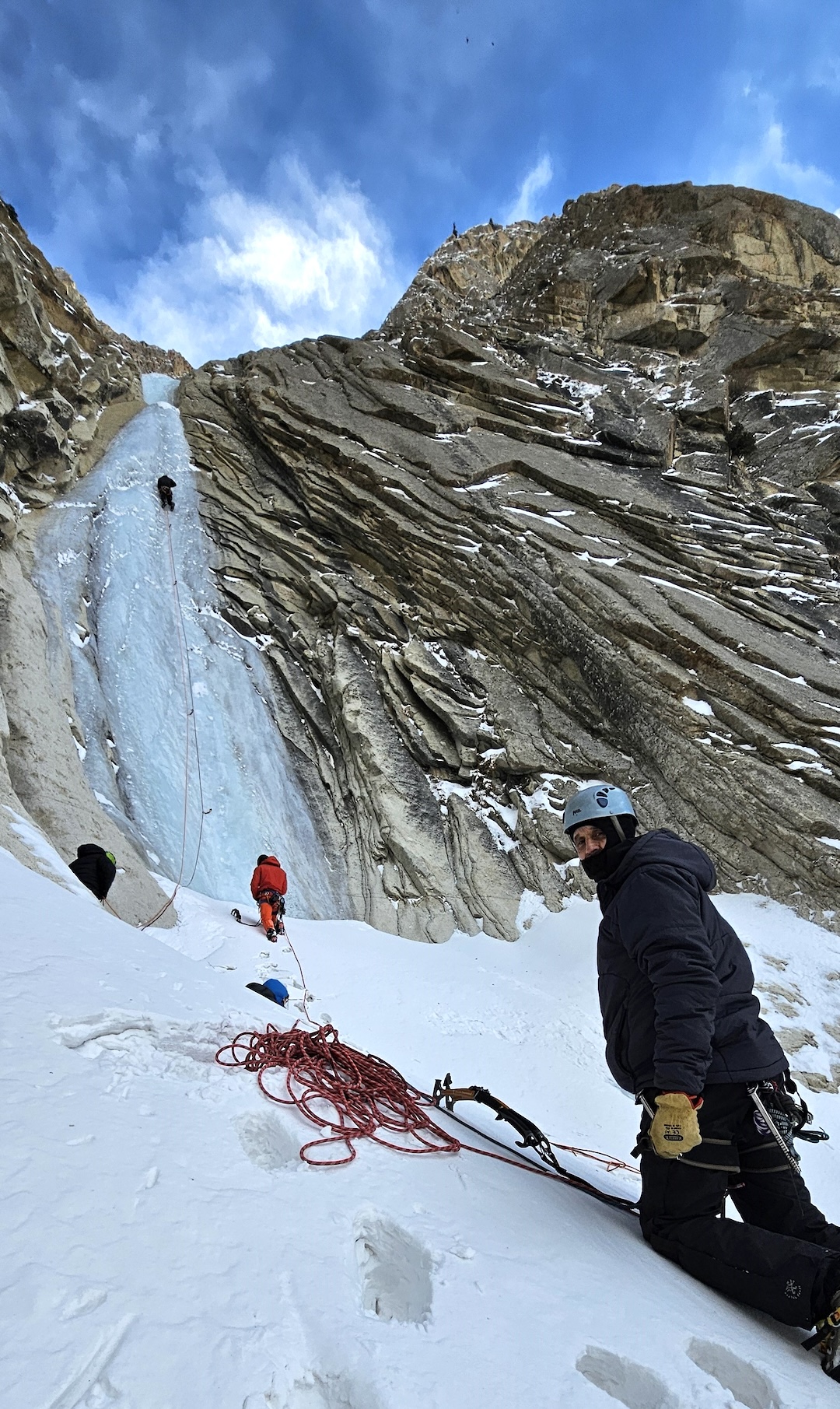
Ice climbing in Pakistan: quick facts
| Fact | Details |
|---|---|
| Main area | Hushe valley, Ghanche District, Gilgit Baltistan |
| Base village | Hushe, about 3,050 m to 3,200 m, below Masherbrum (7,821 m) |
| Ice lines | About 75 m to 300 m |
| Grades | Mostly WI 3+ to WI 4+ |
| Season | Mid December to mid February |
| First climbs | Winter 2024, Spanish French team with Discover Karakoram |
| Next group | 20 January 2027, 14 days |
Where is the ice? The Hushe valley
The Hushe valley runs north from Khaplu towards Masherbrum and the Gondogoro and Charakusa glaciers. In summer it is the start of famous treks and climbs like Laila Peak and Gondogoro La. In winter the village is quiet, the fields are white, and the waterfalls in the granite side gullies freeze into long lines of blue ice. Because lower valleys around Skardu and Khaplu are often too dry or too warm, the best ice forms higher up, in the gullies around Hushe at about 3,200 m to 4,000 m.
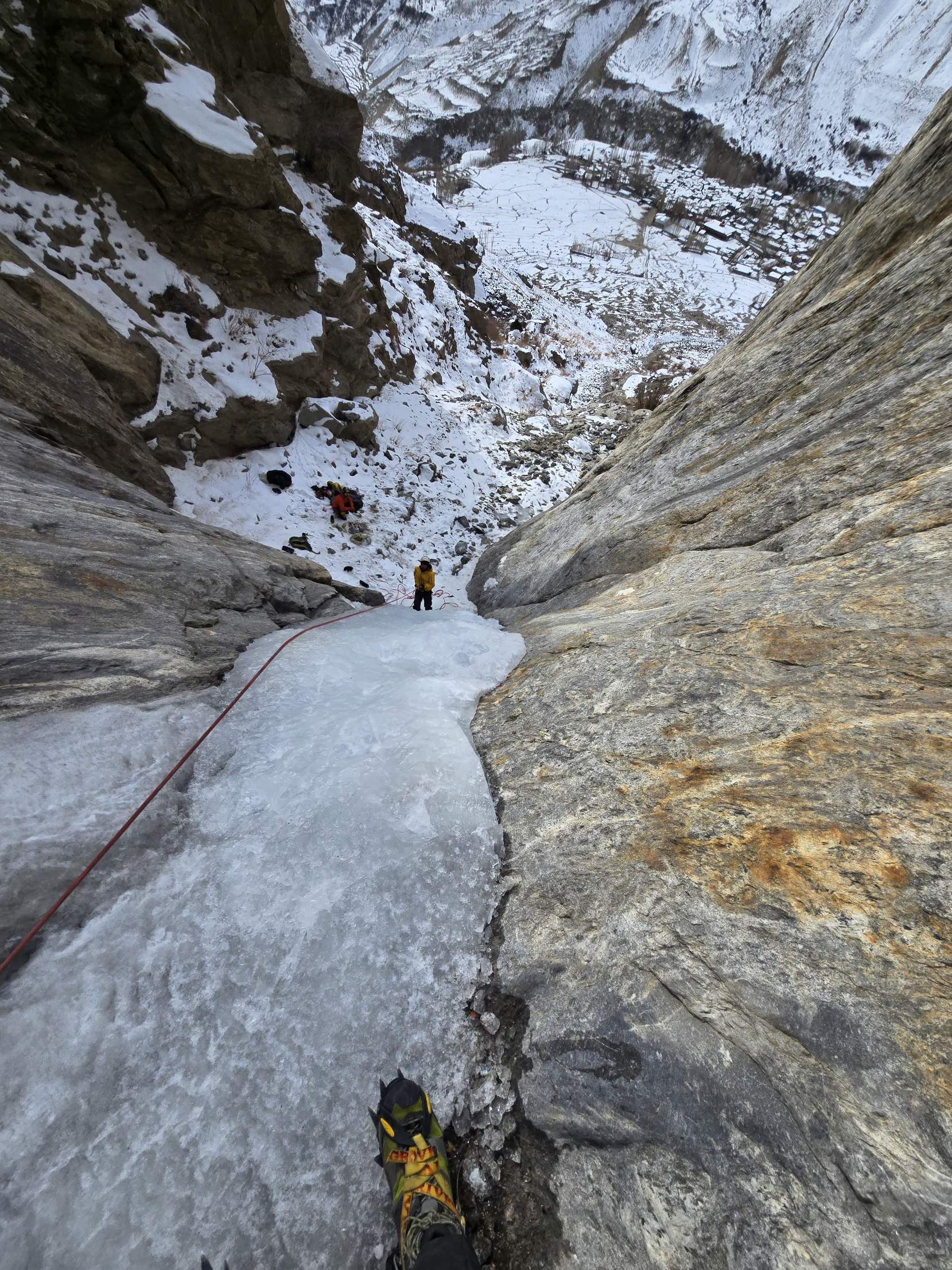
The story of the first ice climbs in the Pakistani Karakoram
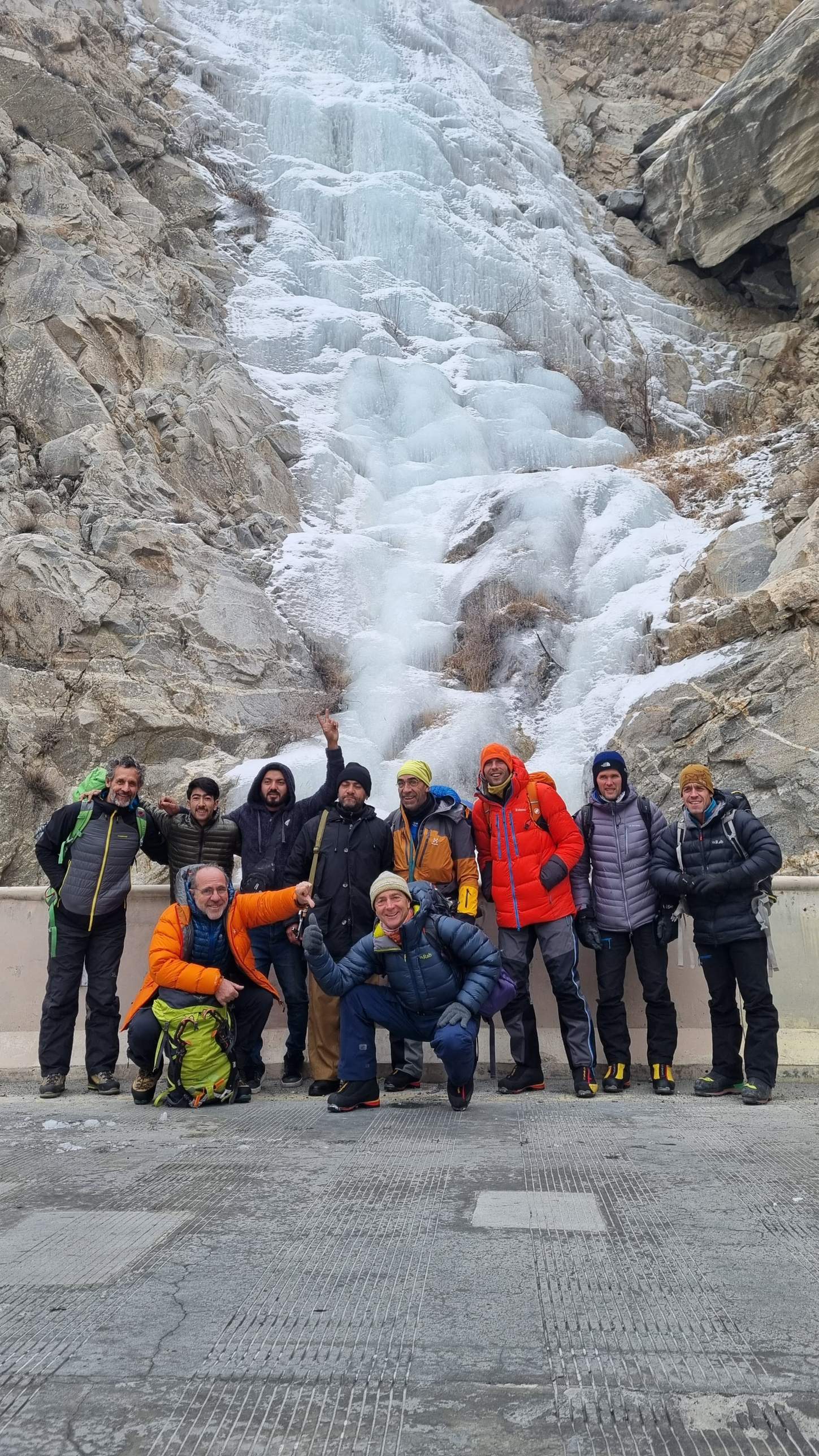
In winter 2024 the Catalan ice explorer Rafa Vadillo, who has opened dozens of icefalls in Lapland, Siberia and Ladakh, came to Pakistan with a team of Spanish and French climbers: David Graells, Jordi Vigatà, Pere Montasell, Jesús Almarza, Javi Sánchez, Joan Picola, Kiko Salvany, Juampi Sabbiones, Romain Sotoca and Bruno Granier. Discover Karakoram, led on the ground by Karim and Ismail Hushevi, organised the logistics.
The journey was hard. Landslides on the road forced a change of plan and the team first went north towards Hunza, where they climbed a short icefall near Attabad Lake. Then they moved to Hushe, and from our village they opened four new icefalls in the side valleys. The winter was very dry, so they had to walk far to find good ice, sometimes with a horse to carry gear.
| Icefall | Length | Grade |
|---|---|---|
| Shoma Chan | 175 m | WI 4+ |
| Wasoq Left | 250 m | WI 3+ |
| Wasoq Right | 120 m (plus about 300 m of WI 2 frozen stream) | WI 4+ |
| Lower Tisar | 75 m | WI 4+ |
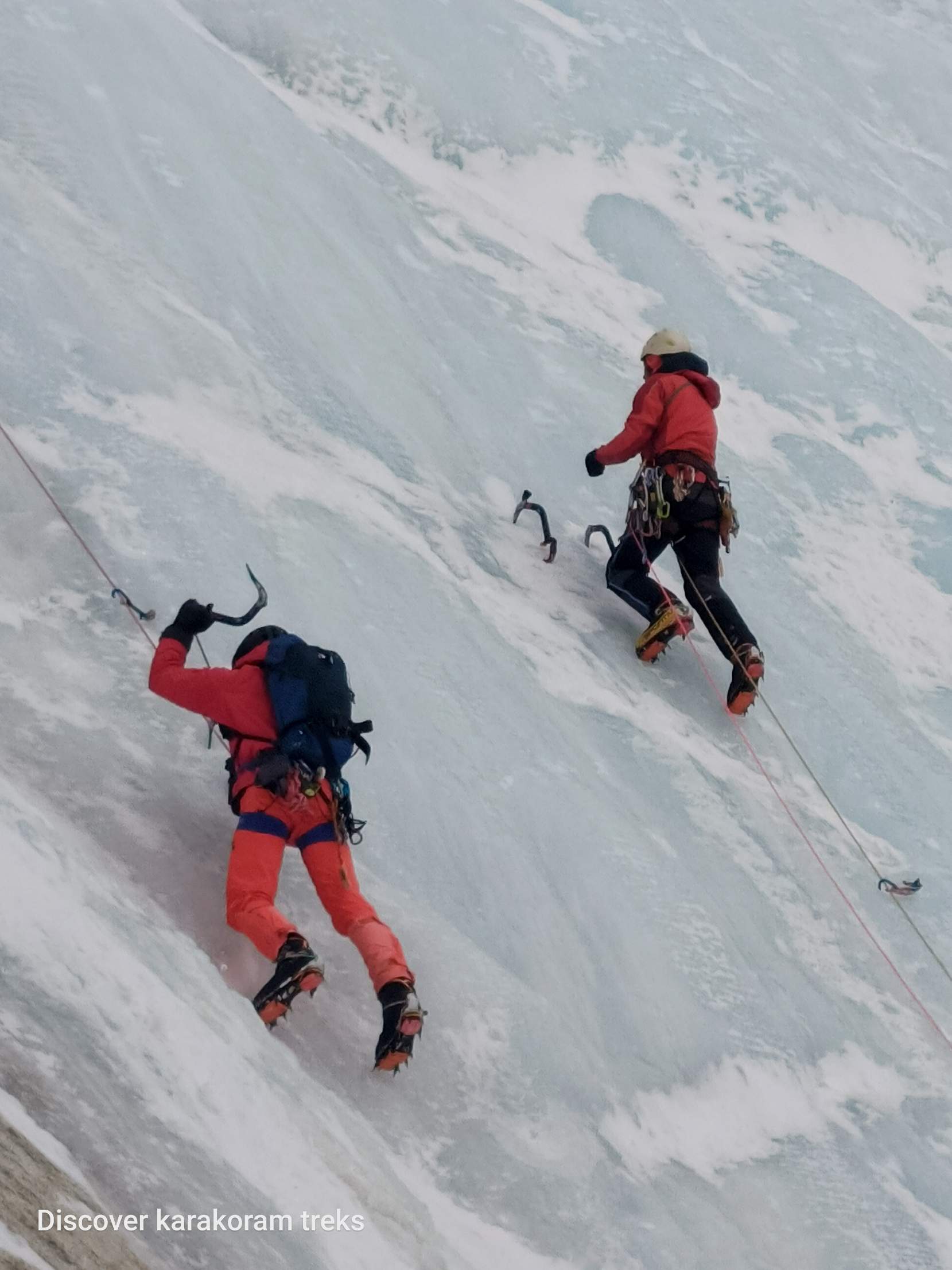
During the climb of Wasoq Left the team ran an ice climbing course for our local guides Ali Hassan, an 8,000 m climber, Ahmed Fata, Khadim Ali and Karim Hushevi, with equipment supported by the Italian brand CAMP. Our founder Rozi Ali shared stories from his decades of expeditions with famous climbers. The expedition was reported by Desnivel, Barrabes, Cumbres magazine and Sportvicious as the first ice climbing in the Pakistani Karakoram.


Ice climbing in Hushe since 2024
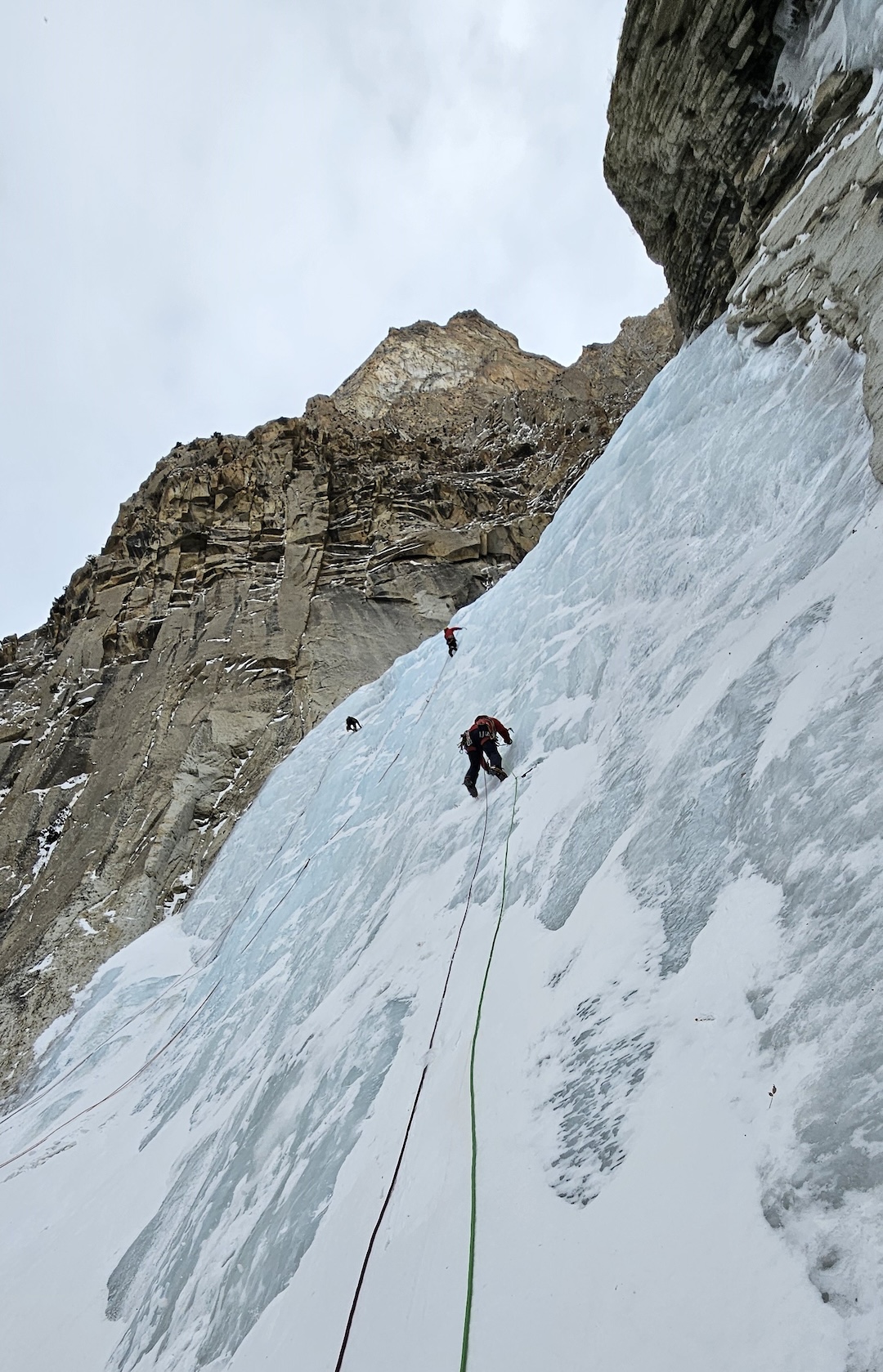
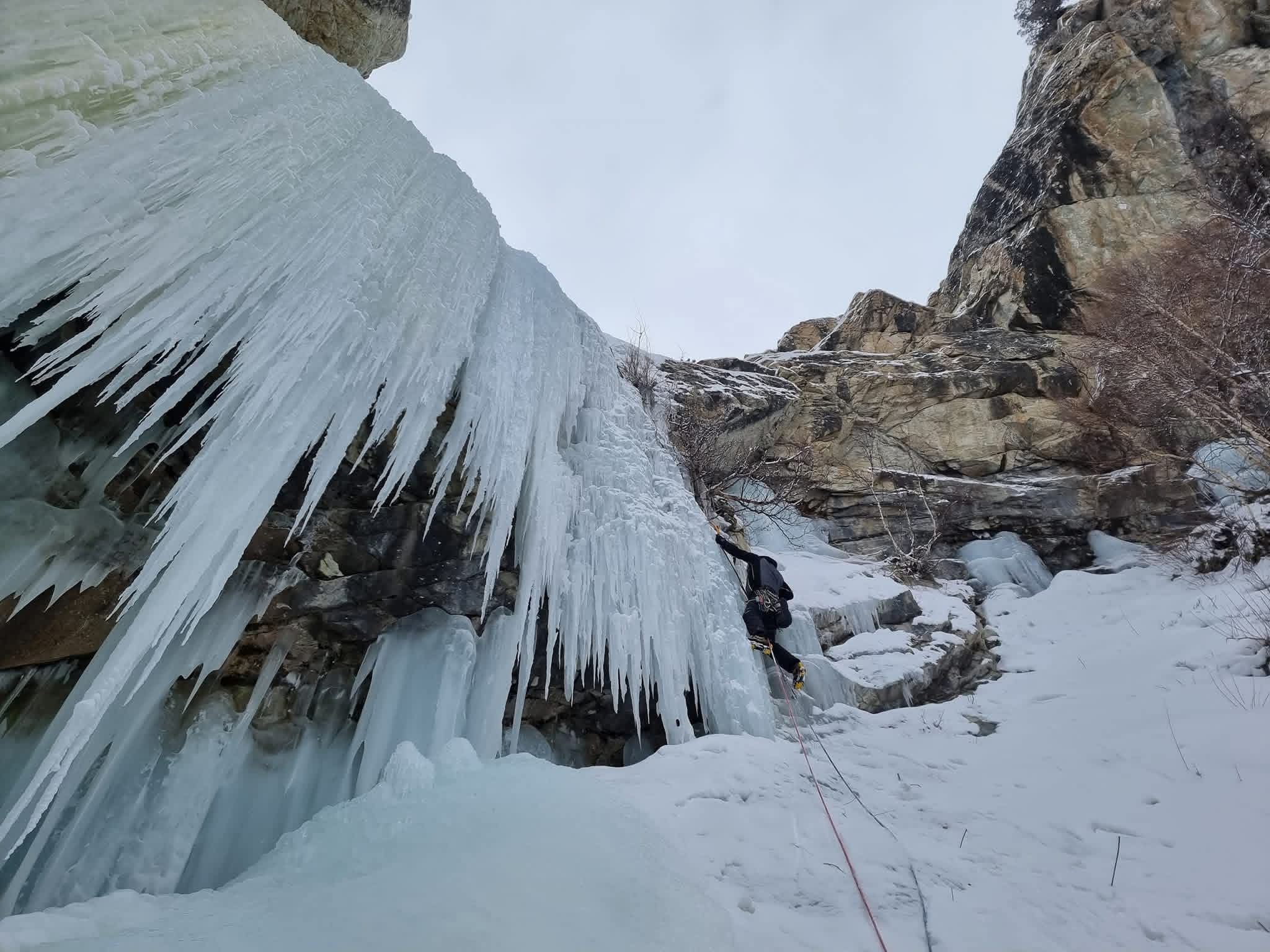
Since that first winter, Discover Karakoram has welcomed ice climbers to Hushe every season. Our guides now climb the classic lines, check the ice every morning and look for new lines in the upper Hushe and Aling valleys. Walls of about 200 m to 300 m form in a good winter, with steep pillars, long gullies and wide slabs of ice for training.
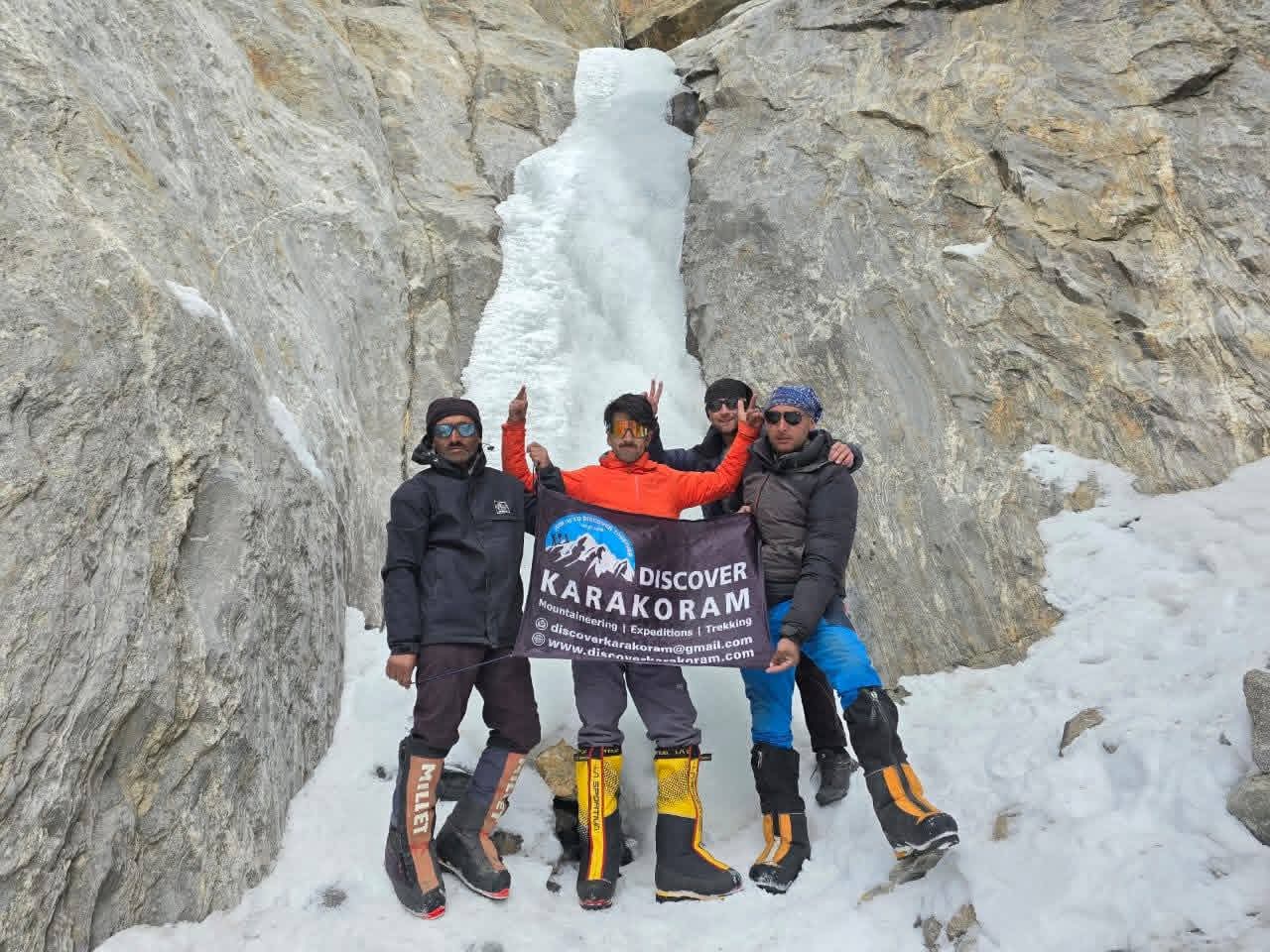
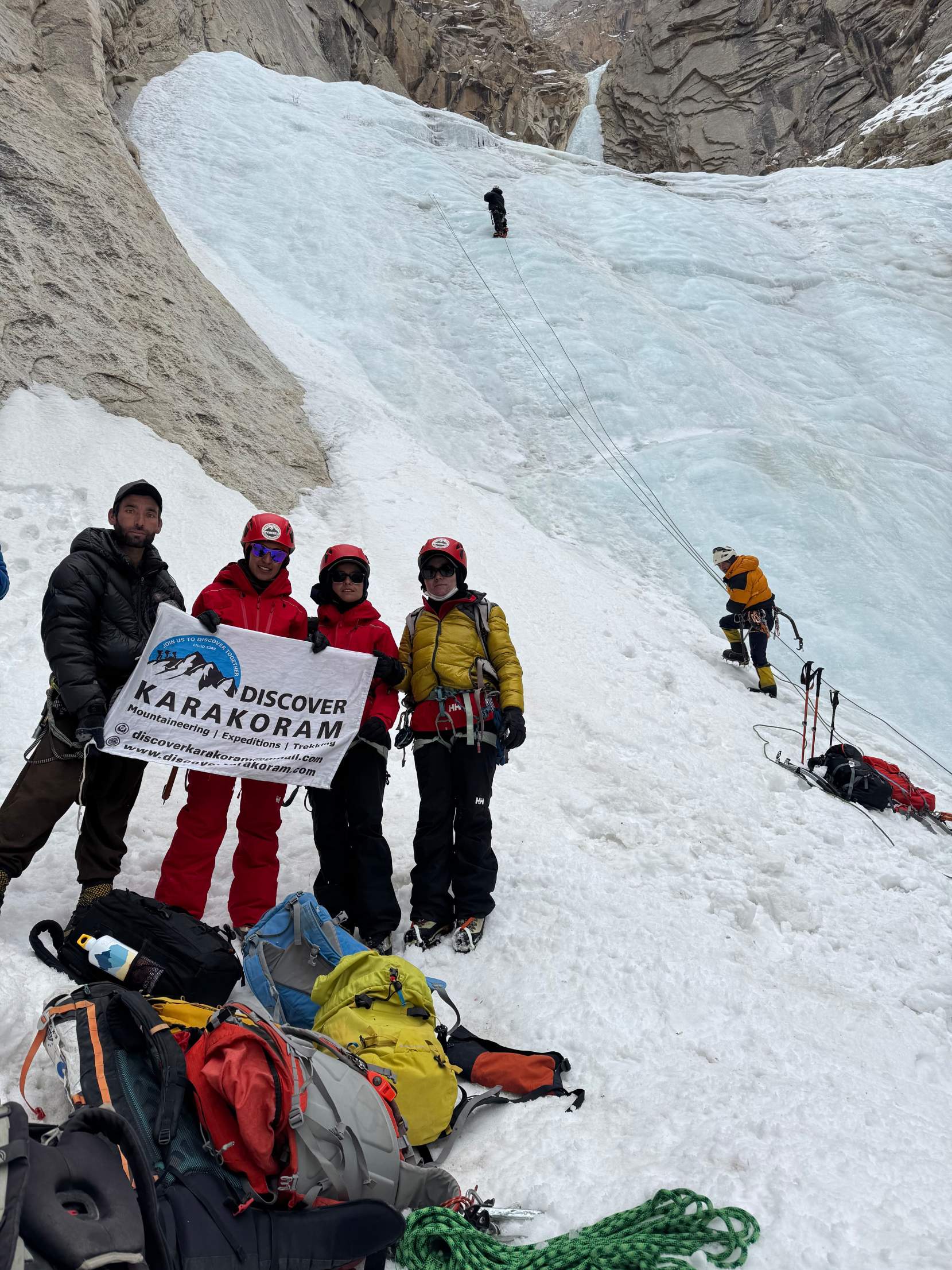
What is a typical ice climbing day like?
- Breakfast by the wood stove in the guesthouse
- Walk of 30 minutes to 3 hours to the ice, sometimes with a horse or porter for the gear
- Climb in teams of two or three, with our guides leading or rigging top ropes
- Hot tea and lunch below the icefall
- Back in Hushe before dark for dinner with local families
The 14 day ice climbing itinerary
| Day | Plan |
|---|---|
| 1 (20 Jan 2027) | Arrive in Islamabad |
| 2 | Fly to Skardu |
| 3 | Gear check and preparation in Skardu |
| 4 | Drive to Hushe |
| 5 | Shoma Chan icefall |
| 6 | Wasoq Left |
| 7 | Rest day in Hushe |
| 8 | Wasoq Right |
| 9 | Tisar icefall |
| 10 | Exploration of new ice in upper Hushe and the Aling valley |
| 11 | Drive to Skardu |
| 12 | Fly to Islamabad |
| 13 | Contingency day |
| 14 | Fly home |
Weather and conditions
January is the heart of winter in Baltistan. Nights are often between minus 10 °C and minus 20 °C, and days near 0 °C in the sun. Ice quality depends on the snow and cold of each season: in a dry year the ice forms only in the higher gullies. Our guides in Hushe report conditions to every group before the trip.
What to bring
- Two technical ice tools and 12 point crampons
- Warm double or insulated mountaineering boots
- Harness, helmet, belay device, slings and screamers
- Several ice screws if you plan to lead (group ropes and anchors are provided)
- Warm layers, insulated pants, belay jacket and warm gloves (several pairs)
- Headlamp, thermos and sunglasses
How to get there
Fly to Islamabad, then take the one hour flight to Skardu. From Skardu it is about 6 hours by jeep to Hushe through Khaplu. Winter flights depend on the weather, so we keep spare days; if flights are cancelled we drive the Karakoram Highway.
Combine ice climbing with snow leopards
The Hushe valley is also home to snow leopards and Himalayan ibex in winter. Read ourguide to winter in Hushe and ask us about adding wildlife days.
Frequently asked questions about ice climbing in Pakistan
Can you go ice climbing in Pakistan?
Yes. The Hushe valley in the Karakoram of Gilgit Baltistan has frozen waterfalls from about 75 m to 300 m. Discover Karakoram organised the first ice climbing expedition there in winter 2024 and runs trips every winter.
Where is the best ice climbing in Pakistan?
The Hushe valley, below Masherbrum (7,821 m), is the first and best known ice climbing area in the Pakistani Karakoram. Ice forms best in the higher side valleys around Hushe.
When is the ice climbing season in Pakistan?
From about mid December to mid February. January is usually the coldest and best month.
What grades are the Hushe icefalls?
Mostly WI 3+ to WI 4+. Shoma Chan is 175 m WI 4+, Wasoq Left 250 m WI 3+, Wasoq Right 120 m WI 4+ above a frozen stream of about 300 m, and Lower Tisar 75 m WI 4+.
Who made the first ice climbs in the Pakistani Karakoram?
A Spanish French team led by Rafa Vadillo opened four icefalls in the Hushe valley in winter 2024, with logistics by Discover Karakoram.
Is there ice climbing in Hunza?
Some small icefalls exist, for example near Attabad Lake, but access to many areas needs special permission. Hushe is the main area with established routes and local support.
How cold is the Hushe valley in winter?
Days can be near 0 °C in the sun, and nights are often between minus 10 °C and minus 20 °C.
How do you get to Hushe in winter?
Fly Islamabad to Skardu (weather permitting) and drive about 6 hours through Khaplu to Hushe. If flights are cancelled, the Karakoram Highway is used.
Where do climbers stay?
In heated local guesthouses in Hushe village, with home cooked food and a traditional wood stove.
What gear do I need?
Two technical ice tools, crampons, warm mountaineering boots, harness, helmet, belay device, warm layers and a down jacket. Group ropes and anchors are provided on our trips.
Is ice climbing in Pakistan safe?
Gilgit Baltistan is peaceful and welcoming. On the ice, safety comes from experience, checking conditions daily and good local guides.
Can beginners try ice climbing in Hushe?
Yes, with a slower program on easier ice and top rope training, but the main trip is best for climbers with some experience.
Is there a fixed departure?
Yes. Our 2027 ice climbing group starts in Islamabad on 20 January 2027, for 14 days.
How much does an ice climbing trip to Pakistan cost?
Prices are on request and depend on group size. Contact Discover Karakoram for a quote.
Ready for the first ice of the Karakoram? See the14 day ice climbing trip, theice climbing page or message us on WhatsApp +92 355 5733499.
